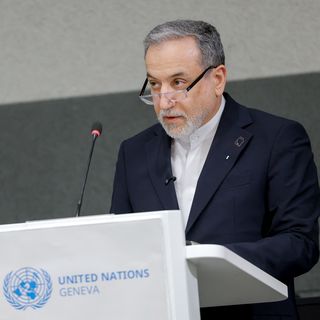
U.S. and Iran say progress made in Geneva nuclear talks
By Barak Ravid
Transparency Analysis
Primary Narrative
U.S. and Iran report progress in Geneva nuclear talks while the U.S. simultaneously deploys additional military forces to the Middle East.
⚠ Conflicts of Interest
Trump administration negotiators (Kushner, Witkoff) are simultaneously pursuing military escalation, creating potential conflict between negotiating in good faith and maintaining pressure through force
Evidence: Article juxtaposes 'made progress' in talks with 'U.S. is amassing more forces' and specific military deployments
Who Benefits?
Trump administration
Demonstrates diplomatic engagement while maintaining military pressure, allowing claim of strength in negotiations
Defense contractors
Increased military deployment and aircraft movement suggests sustained defense spending and operational activity
Framing Analysis
Perspective
Centered on official statements from U.S., Iranian, and Omani government representatives; diplomatic optimism is emphasized
Tone
Language Choices
- 'made progress' (positive framing, repeated 4 times)
- 'serious, constructive and positive' (direct quote emphasizing optimism)
- 'good progress' (repeated positive language)
- 'amassing more forces for possible military action' (neutral but ominous phrasing)
Omitted Perspectives
- Skeptical analysis of whether simultaneous military buildup undermines diplomatic credibility
- Historical context of failed Iran nuclear negotiations
- Perspectives from regional allies (Saudi Arabia, Israel, UAE) on the talks
- Expert analysis on feasibility of reaching agreement
Entity Relationships
Oman mediates negotiations between U.S. and Iran | Evidence: Omani foreign minister Badr Albusaidi, who mediated the talks
Oman mediates negotiations between U.S. and Iran | Evidence: Omani foreign minister Badr Albusaidi, who mediated the talks
Kushner serves as Trump's envoy in nuclear negotiations | Evidence: President Trump's envoys Jared Kushner and Steve Witkoff
Factual Core
U.S. and Iranian officials reported progress in Geneva nuclear talks, with both sides agreeing on guiding principles and planning further negotiations. Simultaneously, the U.S. deployed additional military assets to the Middle East including a second carrier strike group and 50+ fighter jets.
Full Article
The U.S.-Iran nuclear talks in Geneva on Tuesday "made progress," but "there are still a lot of details to discuss," a U.S. official told Axios. The latest: After negotiations with President Trump's envoys Jared Kushner and Steve Witkoff, the Iranians offered to come back in the next two weeks with detailed proposals "to address some of the open gaps in our positions," the official said. Catch up quick: Earlier Tuesday, Iran's foreign minister Abbas Araghchi claimed that the two sides had agreed on the "guiding principles" for a potential nuclear deal. Meanwhile, the U.S. is amassing more forces in the Middle East for possible military action against Iran. In recent days, Trump has sent a second aircraft carrier strike group to the region. More than 50 F-35, F-22 and F-16 fighter jets have moved to the region over the last 24 hours, according to open source flight radar data and a U.S. official. What they're saying: Araghchi said the talks were "serious, constructive and positive" and claimed "good progress was made compared to the previous meeting, and we now have a clearer path ahead." "Various ideas were presented and discussed seriously. Ultimately, we were able to reach a general understanding on a set of guiding principles, on the basis of which we will move forward from now on and begin working on the text of a potential agreement. This does not mean that we can reach an agreement quickly, but at least the path has begun," Araghchi told Iranian state television. Omani foreign minister Badr Albusaidi, who mediated the talks, said that the second round of negotiations ended "with good progress towards identifying common goals and relevant technical issues." He added that "the spirit of our meetings was constructive." "Together we made serious efforts to define a number of guiding principles for a final deal," he said. "Much work is yet to be done, and the parties left with clear next steps before the next meeting." The other side: Asked about the talks, a U.S. official said they went "as expected." What to watch: The Iranian foreign minister said both sides agreed to work on drafts of a potential agreement, exchange texts and then determine a date for the third round of negotiations. Editor's note: This story was updated with additional reporting.