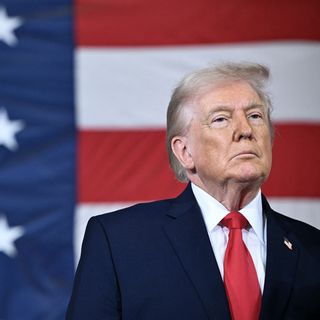
Trump says Iran "doesn't want the consequences" of not making a nuclear deal with the U.S.
By Barak Ravid
Transparency Analysis
Primary Narrative
Trump administration is preparing for critical nuclear negotiations with Iran in Geneva, combining diplomatic engagement with military pressure to force Iranian concessions.
⚠ Conflicts of Interest
Sen. Lindsey Graham serves as both Trump advisor and political ally, creating incentive to present Trump's Iran strategy favorably
Evidence: Graham 'spoke to Trump about Iran ahead of his Middle East trip' and provides extensive favorable commentary on Trump's approach
Axios relies on Trump administration officials as primary sources, creating potential bias toward administration narrative
Evidence: Article cites 'U.S. officials' and Trump directly; no independent verification of claims about Iranian negotiating positions
Who Benefits?
U.S. defense contractors
Military buildup in Persian Gulf (F-35 jets, aircraft carriers) increases demand for military equipment and services
Trump administration
Framing positions Trump as tough negotiator willing to use military force, appealing to his political base
Israeli government
Article notes full coordination between Trump and Netanyahu on Iran policy, suggesting alignment on hardline approach
Framing Analysis
Perspective
Trump administration and allied Republican officials (Sen. Graham); U.S. government perspective dominates
Tone
Language Choices
- 'make or break moment' - creates artificial urgency and drama
- 'tough negotiators' - characterizes Iranians in stereotypical terms
- 'doesn't want the consequences' - implicit threat language
- 'real ideas to achieve a fair and equitable deal' vs. Trump's framing - contrasts Iranian and U.S. rhetoric without analysis
Omitted Perspectives
- Iranian domestic political constraints and public opinion
- European or other international allies' perspectives on negotiations
- Historical context of U.S.-Iran relations and previous failed negotiations
- Expert analysis on feasibility of nuclear deal terms
- Humanitarian impact of military buildup or potential conflict
Entity Relationships
Kushner serves as Trump's envoy in nuclear negotiations with Iran | Evidence: Trump's envoys include 'Jared Kushner'
Graham spoke to Trump about Iran ahead of his Middle East trip and serves as Trump advisor on Iran policy | Evidence: Graham 'spoke to Trump about Iran ahead of his Middle East trip'
Witkoff serves as Trump's envoy in nuclear negotiations with Iran | Evidence: Trump's envoys include 'Steve Witkoff'
Factual Core
U.S.-Iran nuclear negotiations are scheduled for Tuesday in Geneva with Trump's envoys meeting Iran's Foreign Minister. The Trump administration is simultaneously conducting military buildup in the Persian Gulf with additional fighter jets and aircraft carriers.
Full Article
President Trump said he is going to be "involved indirectly" in the second round of nuclear talks between the U.S. and Iran that will take place in Geneva on Tuesday. Why it matters: The meeting tomorrow between Trump's envoys Jared Kushner and Steve Witkoff and Iranian Foreign Minister Abbas Araghchi could be a make or break moment that will signal whether the two countries are moving towards an new nuclear deal or towards a war. U.S. officials said they expect Iran to come to the talks on Tuesday with tangible concessions regarding its nuclear program. What he's saying: The talks "will be very important," Trump told reporters aboard Air Force One on Monday night. "The Iranians are tough negotiators ... I hope they are going to be more reasonable," he added. "They want to make a deal. I don't think they want the consequences of not making a deal." Driving the news: While Trump said he prefers a diplomatic solution and wants to reach a deal with Iran, he has also ordered a massive military buildup in the Persian Gulf — including sending a second aircraft carrier strike group. Another group of 18 F-35 fighter jets, together with several tankers, arrived in the Middle East on Monday, according to open-source flight radar data. Iran's foreign minister met on Monday in Geneva with his Oman counterpart, Badr al-Busaidi, who is mediating between the U.S. and Iran. He also met with the International Atomic Energy Agency's (IAEA) director general, who will have a key role in monitoring and verifying any potential nuclear deal. "I am in Geneva with real ideas to achieve a fair and equitable deal," Araghchi wrote on X on Monday. "What is not on the table: submission before threats." Between the lines: Sen. Lindsey Graham (R-S.C.), who visited Israel on Monday and met with Israeli Prime Minister Benjamin Netanyahu told Axios the Trump administration and the Israeli government are fully coordinated on Iran. "There is no distance between Trump and Bibi," he said. Graham, who spoke to Trump about Iran ahead of his Middle East trip, said the president has "two lines in the water;" one that focuses on diplomacy and another that has to do with potential military action. "Trump isn't gonna let Iran play the game of endless talks and moving the goal posts. He is fully aware of the consequences of action and inaction," Graham said. "A lot will be determined on what Iran does." Graham stressed Trump will make a decision in weeks, rather than months.